∞
Color limit
1
Piece minimum
24 hr
Mockup turnaround
1440dpi
Print resolution
Method 02
What is Direct-to-Film?
Direct-to-Film (DTF) printing uses inkjet technology to print full-color artwork onto a special film. The printed transfer is then heat-pressed onto a garment — bonding at the fiber level for a soft, durable finish.
Because there are no screens to set up and no stitch count to worry about, DTF handles unlimited colors, ultra-fine detail, and photographic gradients without any extra cost. It's the most versatile decoration method available — and it works on almost any fabric.
- Color
- Full CMYK + white underbase — unlimited colors in a single pass
- Resolution
- Up to 1440 dpi — photographic quality at any print size
- Fabrics
- Cotton, polyester, poly-cotton blends, and most naturals
- Minimum quantity
- 1 piece — no minimums ever
- Turnaround
- 3–5 business days after artwork approval
- File formats
- PNG (transparent bg) ideal; vector (AI, EPS, SVG) also accepted
Where it shines
DTF works where other methods stop.
Full-color artwork
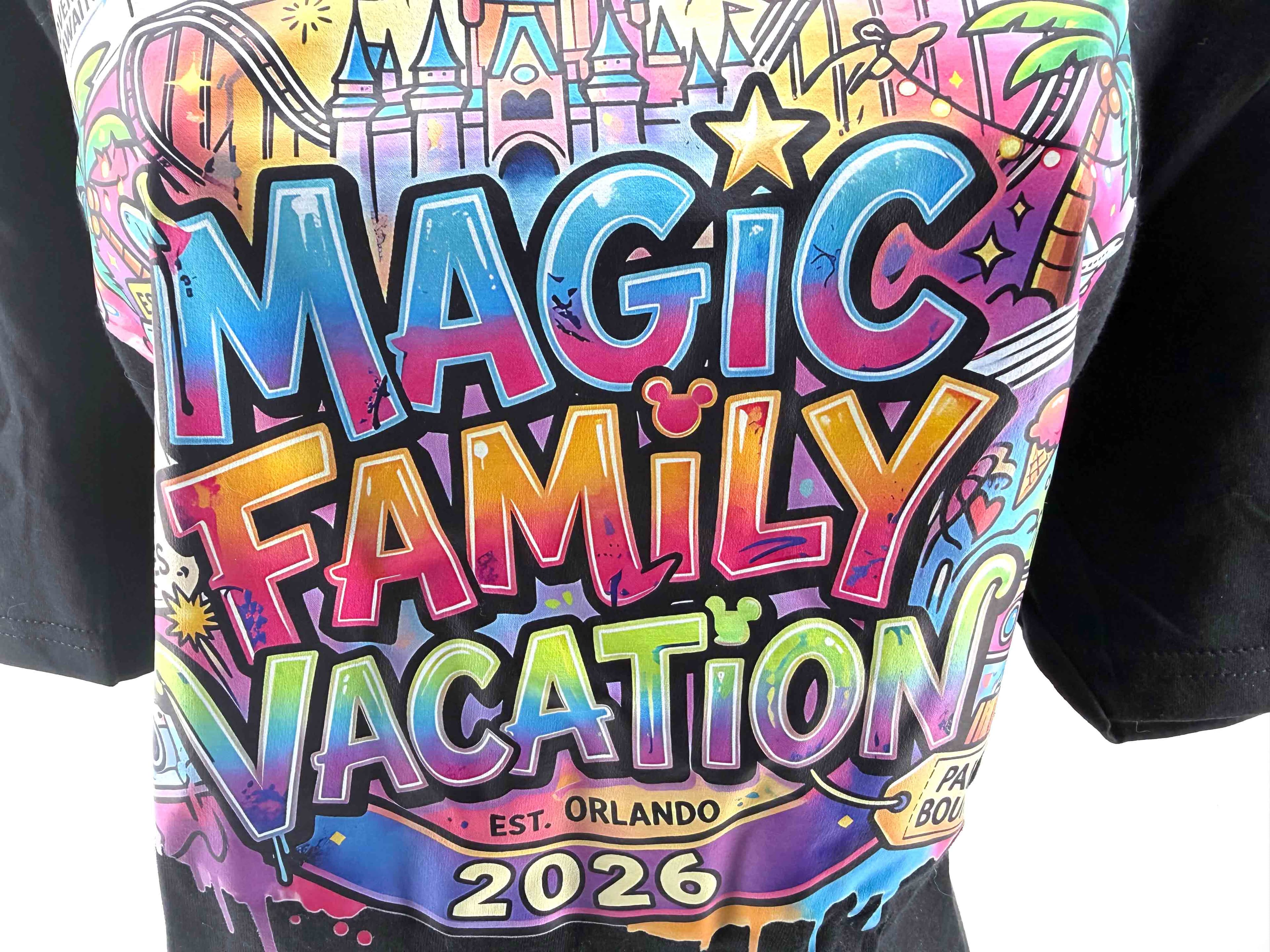
Gradients, shadows, and photographic imagery — rendered in full CMYK with no color limit.
Fine type & line work
Small lettering and intricate details that stitch counts simply can't accommodate.
Dark garments
White underbase keeps colors vivid and opaque on black, navy, or any dark fabric.
Low-quantity runs
No screen setup costs means one piece is just as economical as a dozen.
Multiple fabric types
Cotton, polyester, and most natural-fiber blends. We confirm compatibility before printing.
Transfers only
We can produce transfers you apply yourself — ideal if you have your own blanks.
Why choose DTF
Full color. Soft feel. No compromises.
No stitch limitations
Photographic gradients, fine type at 6pt, complex illustrations with shadows and blends — DTF captures everything that embroidery structurally cannot.
Soft hand, flexible film
Properly applied DTF transfers are thin and flexible. They move with the garment and don't have the stiff plastic feel of old-school heat transfer vinyl.
No setup costs
Screen printing charges a setup fee per color, per job. DTF has none of that. Whether it's 1 piece or 100, you pay per print — not per screen.
The process
Simple from start to finish.
Send your art
Share your design file or concept. PNG, vector, or even a rough sketch — we'll take it from there.
Artwork prep
We prepare your file for DTF output, add the white underbase where needed, and check sizing and resolution.
Approve the mockup
A free digital preview shows your design on the garment. Nothing gets printed until you sign off.
Print & delivery
We print, press, and ship your order. Most jobs are out within 3–5 business days of approval.
How does DTF compare to screen printing?
Screen printing is cost-effective at high volumes but requires a separate screen per color and a setup fee per job. DTF has no setup costs, no minimums, and handles unlimited colors in a single pass. For quantities under 50 — or for full-color, complex artwork — DTF almost always wins.
Is the print soft to the touch?
Yes. DTF film is thin and flexible — much softer than plastisol screen prints or thick heat transfer vinyl. Most people don't notice it when wearing the garment.
Will it crack or peel over time?
When properly applied (correct temperature, pressure, and peel timing), DTF transfers wash and wear well for the life of the garment. We use calibrated equipment and cure every transfer. If you buy transfers to apply yourself, we include the full application specs.
What file formats work best?
PNG with a transparent background is ideal — the white underbase is generated automatically from your artwork. Vector files (AI, EPS, SVG) are also great. For rasters, minimum 300 dpi at the intended print size.
Can you print on dark-colored garments?
Yes. Every design on a dark fabric gets a white underbase layer printed first, which keeps your colors opaque and vivid regardless of the garment color.
Is there a minimum order?
No minimum — ever. A single custom shirt gets the same care as a run of fifty. Larger orders get better per-unit pricing.